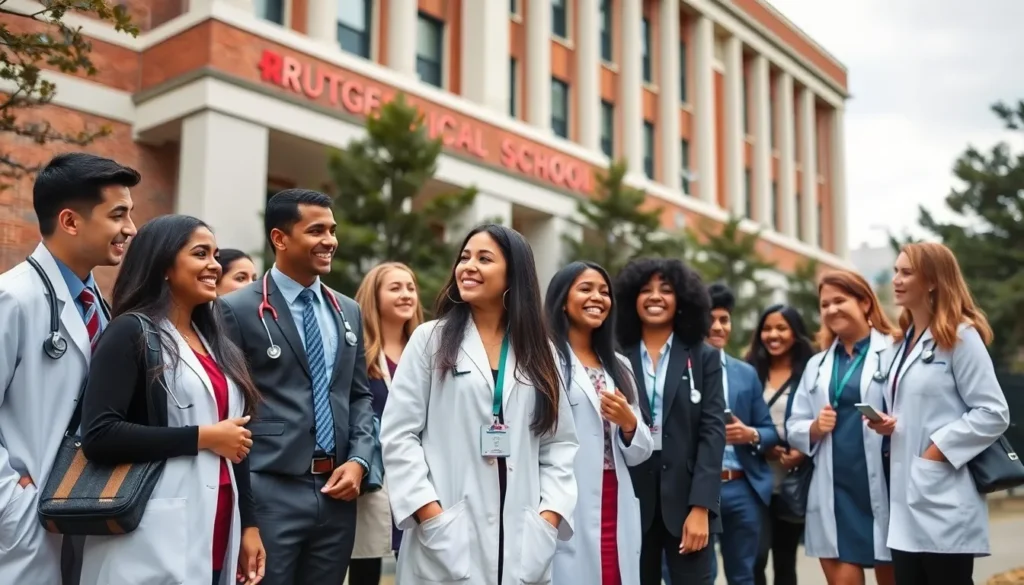
Getting into medical school can feel like trying to find a needle in a haystack, especially when it comes to Rutgers Medical School. With its impressive reputation and a curriculum that promises to turn aspiring doctors into healthcare superheroes, the acceptance rate is a hot topic for hopeful applicants.
But don’t let those numbers scare you off! Understanding the acceptance rate at Rutgers can be your secret weapon in this competitive game. It’s not just about the stats; it’s about what they mean for your chances and how you can stand out from the crowd. So grab your stethoscope and a cup of coffee, because diving into the world of Rutgers Medical School acceptance rates might just be the first step toward your future in medicine.
Overview of Rutgers Medical School
Rutgers Medical School stands out for its commitment to excellence in medical education. Located in New Jersey, it integrates robust classroom learning with extensive clinical experiences. This school prioritizes hands-on training, ensuring students engage with real patients early in their education. Faculty members possess diverse backgrounds, providing a wealth of knowledge and insights to aspiring medical professionals.
Reputation plays a significant role in the school’s appeal. Rutgers Medical School consistently ranks among the top institutions for medical training, which attracts a competitive applicant pool. The acceptance rate reflects this competitiveness, underscoring the need for strong academic credentials and relevant experiences.
Programs at Rutgers emphasize innovation and research. Students benefit from cutting-edge facilities and resources that foster discovery and clinical application. Engaging in research opportunities allows students to contribute to advancements in medicine while also enhancing their applications.
Community service forms a core component of the curriculum. Rutgers Medical School encourages students to engage with various populations, promoting health equity and awareness. Prioritizing service helps students develop empathy and cultural competence, vital traits for future physicians.
Studying here means being part of a collaborative environment. Students often form study groups and participate in peer mentoring, enhancing their learning experience together. This peer support fosters a sense of community and belonging, essential for navigating the often-challenging path to becoming a physician.
Rutgers Medical School Acceptance Rate

Gaining admission to Rutgers Medical School remains a challenging goal for many applicants. Understanding acceptance rates can help aspiring students strategize their application.
Current Acceptance Rate Statistics
As of the latest data, Rutgers Medical School’s acceptance rate stands at approximately 11%. This figure reflects the school’s selective admissions process, with around 3,300 applications submitted annually. Approximately 350 students gain acceptance each year, illustrating the competitive nature of the program.
Historical Trends in Acceptance Rates
Over the past five years, the acceptance rate for Rutgers Medical School has exhibited slight fluctuations. In 2020, the rate decreased to around 10%, while it was closer to 12% in 2019. Trends indicate that as the school’s reputation grows, application numbers rise, impacting acceptance rates. Historical data shows that consistency in strong academic performance and diverse experiences contributes to successful admissions in recent years.
Factors Influencing Acceptance
Rutgers Medical School’s acceptance rate reflects various elements that impact candidate selection. Understanding these factors increases the chances of a successful application.
Academic Qualifications
Strong academic credentials play a crucial role in acceptance decisions. Candidates typically present high GPAs, often above 3.5, alongside competitive MCAT scores averaging around 510. A rigorous course load, including advanced sciences, demonstrates readiness for the challenging curriculum. Solid academic performance throughout undergraduate education signals commitment to excellence. Admissions committees also consider trends in academic performance, favoring applicants who show improvement over time.
Extracurricular Activities
Extracurricular involvement adds depth to applications. Engagement in volunteer work, particularly in healthcare settings, showcases dedication to community service. Strong leadership experiences through student organizations or healthcare-related initiatives indicate well-rounded candidates. Participation in research projects highlights a commitment to advancing medical knowledge. Additionally, consistent involvement in activities that promote empathy and cultural competence aligns with the school’s core values, enhancing an applicant’s profile.
Application Process
The application process for Rutgers Medical School involves several critical components. Prospective students must prepare carefully to enhance their chances of acceptance.
Required Documentation
Candidates need to submit a completed application through the AMCAS system. A personal statement and letters of recommendation, typically two to three, are essential. Transcripts from all post-secondary institutions should accompany the application. Applicants must also include their MCAT scores, with competitive scores averaging around 510. Lastly, an optional secondary application provides further insight into the applicant’s background and motivations.
Important Deadlines
Adhering to deadlines is crucial for a successful application. The primary application deadline falls in early October. After submission, applicants often receive secondary applications within a few weeks. The secondary application usually has a due date in late November. Interviews are generally scheduled from January to March, while acceptance notifications typically occur in late spring. Timely submission of all documents is vital to ensure full consideration.
Tips for Prospective Students
Understanding the competitive landscape of Rutgers Medical School significantly benefits prospective students. Focus first on academic excellence, aiming for a GPA above 3.5 to stay competitive in the applicant pool. Competitive MCAT scores also play a crucial role; strive for an average around 510. Rigorous coursework demonstrates preparedness for the medical curriculum.
Engagement in extracurricular activities enhances an application. Volunteer work in healthcare settings shows dedication to the field and desire to serve the community. Leadership experiences contribute to a well-rounded profile, emphasizing skills beyond academic performance. Participation in research underscores a commitment to advancing medical knowledge.
Crafting a compelling personal statement matters as well. This component offers a chance to share unique motivations for pursuing medicine. Authenticity resonates with admissions committees, so potential students should reflect on personal experiences and values.
Submitting a complete application through the AMCAS system requires attention to details. Timeliness in submitting primary applications in early October ensures consideration. Secondary applications, usually due in late November, offer further insights into the applicant’s background. Interviews typically occur from January to March, making preparation essential.
Building a network is also beneficial. Engaging with current students or alumni can provide inside perspectives on the application process. Peers often share advice on navigating challenges and highlight what to stress in applications.
Highlighting community service aligns with Rutgers Medical School’s mission. Demonstrating empathy and cultural competence through volunteer activities strengthens an application. Emphasizing these traits shows alignment with the school’s core values, enhancing an applicant’s profile significantly.
Understanding the acceptance rate at Rutgers Medical School is crucial for aspiring medical students. With an acceptance rate of around 11% applicants must approach the admissions process strategically. Focusing on strong academic performance and meaningful extracurricular involvement can significantly enhance their chances.
The school’s commitment to hands-on training and community service aligns with its mission to foster compassionate healthcare professionals. By highlighting unique experiences and motivations in their applications candidates can stand out in this competitive landscape. Ultimately the journey to medical school is challenging but with dedication and the right approach applicants can pave their way to success at Rutgers.